Search Site


Wills & Probate

Throughout our lives we buy and collect property, save money, and often incur debt. All of these items become part of our estate. When we pass away, we use a will to provide instructions for our families on how we want our estate to be distributed after our death. New Jersey wills and probate laws deal with the distribution and administration of property in the estate of an individual who dies a resident of New Jersey.
Probate and Estate Planning Terms
This glossary of probate and estate planning terms is designed to help navigate the legal language used in estate planning and probate law.
Will law
Drawing up a will is an important step in the estate planning process. The will is a legal document that directs how you want your property distributed upon your death. In order to be a valid will, New Jersey law provides that the document must be properly signed and witnessed by two people and you must be of sound mind and at least 18 years old when it is signed. The will should also be executed in the presence of a Notary Public in order to simplify the probate process.
Sometimes your wishes, as outlined in your will, are not the hopes and wishes of your family members. Occasionally, families contest the validity of wills or the validity of changes to wills. In order to avoid the possibility of an invalid or contested will, an estate planning attorney can prepare the document for you.
A New Jersey Will usually includes the following:
- Appointment of an executor to carry out your wishes and avoid bonding requirements
- Clear direction of how you want your assets distributed
- Appointment of a guardian for minor or incompetent children
- Possible Trusts for estate tax planning and to protect beneficiaries
A will can be revoked at any time before your death by destroying it or by creating a new will that replaces the old one. Wills executed in the state of New Jersey can be changed by either creating an entirely new will or by adding the changes to the existing will by codicil.
The Law of Probate
Probate or estate administration laws dictate the process of distributing your assets after you die. These laws deal with the following:
|
|
Contact the Firm
If you reside in central New Jersey and need the assistance of a Princeton will or probate lawyer to create a will or administer an estate, contact Mason, Griffin & Pierson, P.C. for consultation. The firm’s probate attorneys have over five decades of experience in drafting wills, estate planning, probate, and estate administration.
-
Julia L. Pickett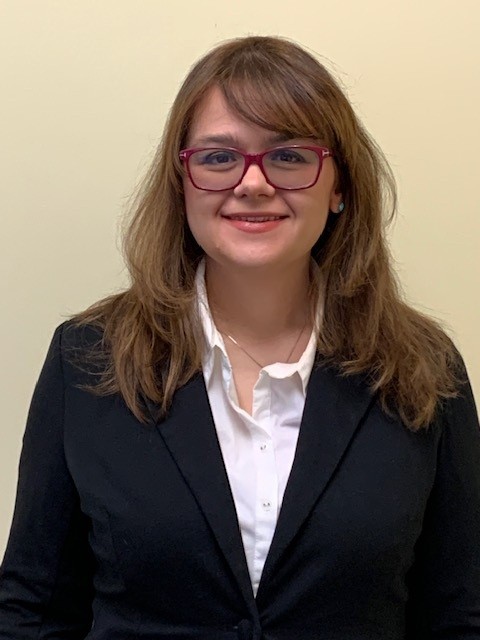 We are pleased to announce that Julia L. Pickett has joined Mason, Griffin & Pierson PC as an Associate. Julia L. Pickett is a member of the firm’s Estates & Trusts Practice Group and assists with estate planning and estate and trust administration matters, including estate, gift, generation-skipping transfers (GST), and inheritance tax issues. Before joining the firm, Julia was the former law clerk to the Presiding Judge of the New Jersey Tax Court, the Honorable Mala Sundar, P.J.T.C.
David R. Demaree We are pleased to announce that David R. Demaree has joined Mason, Griffin & Pierson PC as Of Counsel and part of the Trust and Estates Practice Group. David also has experience in corporate law and international business law and will work with the Firm’s Corporate Practice Group as well. David is fluent in German and holds an LLM in taxation and has been practicing Trust and Estates law in the Princeton community for decades.
Liz Zuckerman Liz Zuckerman will be speaking at the NJAJ Educational Foundation, Inc.’s Meadowlands Seminar® 2025 on Thursday November 20th- Employment Law: A Day of Disability Law: Experts, Law and Ethics. Liz will be leading the panel discussion: When Non-Accommodation Cases Become Personal Injury Cases – WC/LAD and Personal Injury Meet!” www.nj‐justice.org
Ian T. Hammett Ian T. Hammett was recently named a Melvin Jones Fellow by the Lions Club International Foundation in recognition of his humanitarian service through the Hopewell Valley Lions Club. Through the efforts of their Fellows and other Lions Club International members, LCIF works to meet humanitarian needs in communities around the world.” Hopewell Valley Lions
Paul M. Bishop Paul M. Bishop has been named Chair of the Litigation Practice Group.
Kevin A. Van Hise Kevin A. Van Hise has been named Chair of the Local Government Practice Group.





Archives
- November 2025
- August 2024
- March 2024
- January 2024
- November 2023
- August 2023
- July 2023
- June 2022
- October 2021
- May 2021
- March 2021
- February 2021
- January 2021
- December 2020
- March 2020
- February 2020
- January 2020
- December 2019
- October 2019
- July 2019
- June 2019
- May 2019
- March 2019
- January 2019
- December 2018
- November 2018
- October 2018
- September 2018
- June 2018
- May 2018
- April 2018
- March 2018
- February 2018
- January 2018
- December 2017
- November 2017
- October 2017
- September 2017
- August 2017
- June 2017
- May 2017
- April 2017
- February 2017
- December 2016
- November 2016
- October 2016
- September 2016
- July 2016
- June 2016
- May 2016
- April 2016
- March 2016
- February 2016
- January 2016
- December 2015
- November 2015
- October 2015
- September 2015
- July 2015
- June 2015
- May 2015
- April 2015
- March 2015
- February 2015
- January 2015
- December 2014
- November 2014
- October 2014
- September 2014
- August 2014
- July 2014
- June 2014
- May 2014
- April 2014
- March 2014
- February 2014
- January 2014
- December 2013
- November 2013
- October 2013
- September 2013
- August 2013