Search Site


Wills, Probate & Estate Planning Terms

Advance Directive for Health Care/Living Will
A document stating your treatment preferences for medical care should you become ill, mentally disabled or unable to communicate your wishes.
Executor/Personal Representative
The person you designate as responsible for carrying out the arrangements specified by you in your Will. This may include filing of tax returns, hiring an attorney or accountant if necessary, paying creditors, and filing a final accounting with the Court.
Guardian
A person appointed by the court to oversee the physical and financial care of a child, a minor, or someone who is incapable of making their own decisions due to a physical or mental disability.
Instruction Directive/Living Will
A document that provides instructions for your health care treatment should you become ill, mentally disabled, or are unable to make your own decisions.
Intestate
The estate of a person who dies without a Will. If you die without a Will the laws of the State in which you were resident at the time of your death will determine who will represent your estate and to whom your assets will be distributed.
Letters Testamentary
A Court Order (from the Surrogate’s Court) allowing the executor to carry out the directives in the Will.
Proxy Directive/Durable Power of Attorney for Health Care/Medical Power of Attorney
A document that designates the person you appoint to make health care decisions for you should you become incapacitated due to severe injury, illness, mental disability, or are otherwise unable to communicate your wishes.
Power of Attorney
A document that gives authority to another person(s) to act on your behalf financially, for business purposes, or in other situations. You are the principal. The person you designate is the agent / attorney in fact
Probate
Upon death, a legal procedure which authorizes a Will as being valid. This requires going to the Surrogate’s Court in the county where the decedent lived and presenting the original Will and a death certificate.
Short Certificate
A document issued by the Surrogate’s Court, which the executor uses as proof of their appointment when they close bank accounts, transfer property, and take other actions on behalf of the estate of the decedent.
Surrogate
In each county of New Jersey, the Surrogate is the elected individual who, among other duties, validates the Will of a deceased person and sees that the Will is properly executed by the named executor.
Testamentary Guardianship
If you have a child or oversee the care of a minor or someone who is incapable of making their own decisions due to a physical or mental disability, you should name a person in your Will, referred to as the “guardian,” to take care of that minor or disabled person upon your death. The “guardian” will have custody of the minor and will be responsible for making all necessary decisions for that minor. Such decisions may include educational, financial, or medical decisions and/or helping to handle shopping and everyday care activities.
Trust
There are numerous types of trusts used in estate planning. Trusts involve a “trustee” (the person who holds money/assets) and a “beneficiary” (the person who benefits from the money/assets). The “trustor” /“grantor”/ “donor”/“settlor” is the person who generally provides the money/assets and creates the trust that provides personal or financial support to the beneficiary. A “testamentary” trust is a trust created as part of your Will and begins at your death. An “inter vivos trust” begins when you create it and continues during your lifetime or until revoked.
Will/Testament
A document that states your wishes for distribution of your property after death. No matter the size of the estate, a Will is of great importance. Not only does it specify who will carry out the terms of the Will (executor), but it ensures that your assets and property are distributed to the intended persons in the desired amounts and as otherwise directed by you.
Will Contest
The validity of a will may be contested and litigation may end up being the only method to resolve the conflict. Most often a Will contest is due to a claim that the deceased was mentally deficient or was under improper influence while making the Will.
-
Julia L. Pickett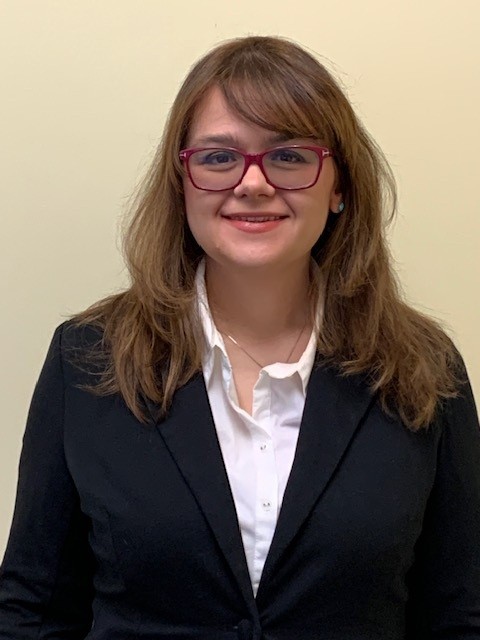 We are pleased to announce that Julia L. Pickett has joined Mason, Griffin & Pierson PC as an Associate. Julia L. Pickett is a member of the firm’s Estates & Trusts Practice Group and assists with estate planning and estate and trust administration matters, including estate, gift, generation-skipping transfers (GST), and inheritance tax issues. Before joining the firm, Julia was the former law clerk to the Presiding Judge of the New Jersey Tax Court, the Honorable Mala Sundar, P.J.T.C.
David R. Demaree We are pleased to announce that David R. Demaree has joined Mason, Griffin & Pierson PC as Of Counsel and part of the Trust and Estates Practice Group. David also has experience in corporate law and international business law and will work with the Firm’s Corporate Practice Group as well. David is fluent in German and holds an LLM in taxation and has been practicing Trust and Estates law in the Princeton community for decades.
Liz Zuckerman Liz Zuckerman will be speaking at the NJAJ Educational Foundation, Inc.’s Meadowlands Seminar® 2025 on Thursday November 20th- Employment Law: A Day of Disability Law: Experts, Law and Ethics. Liz will be leading the panel discussion: When Non-Accommodation Cases Become Personal Injury Cases – WC/LAD and Personal Injury Meet!” www.nj‐justice.org
Ian T. Hammett Ian T. Hammett was recently named a Melvin Jones Fellow by the Lions Club International Foundation in recognition of his humanitarian service through the Hopewell Valley Lions Club. Through the efforts of their Fellows and other Lions Club International members, LCIF works to meet humanitarian needs in communities around the world.” Hopewell Valley Lions
Paul M. Bishop Paul M. Bishop has been named Chair of the Litigation Practice Group.
Kevin A. Van Hise Kevin A. Van Hise has been named Chair of the Local Government Practice Group.






Archives
- November 2025
- August 2024
- March 2024
- January 2024
- November 2023
- August 2023
- July 2023
- June 2022
- October 2021
- May 2021
- March 2021
- February 2021
- January 2021
- December 2020
- March 2020
- February 2020
- January 2020
- December 2019
- October 2019
- July 2019
- June 2019
- May 2019
- March 2019
- January 2019
- December 2018
- November 2018
- October 2018
- September 2018
- June 2018
- May 2018
- April 2018
- March 2018
- February 2018
- January 2018
- December 2017
- November 2017
- October 2017
- September 2017
- August 2017
- June 2017
- May 2017
- April 2017
- February 2017
- December 2016
- November 2016
- October 2016
- September 2016
- July 2016
- June 2016
- May 2016
- April 2016
- March 2016
- February 2016
- January 2016
- December 2015
- November 2015
- October 2015
- September 2015
- July 2015
- June 2015
- May 2015
- April 2015
- March 2015
- February 2015
- January 2015
- December 2014
- November 2014
- October 2014
- September 2014
- August 2014
- July 2014
- June 2014
- May 2014
- April 2014
- March 2014
- February 2014
- January 2014
- December 2013
- November 2013
- October 2013
- September 2013
- August 2013